The Florida Keys Developer's Toolkit: Astro, Tailwind, and Salt Air
Why I chose Astro and Tailwind CSS as my go-to stack, and how building websites from a dock in Islamorada shaped my approach to web development.
Kit Mobley
Islamorada, FL
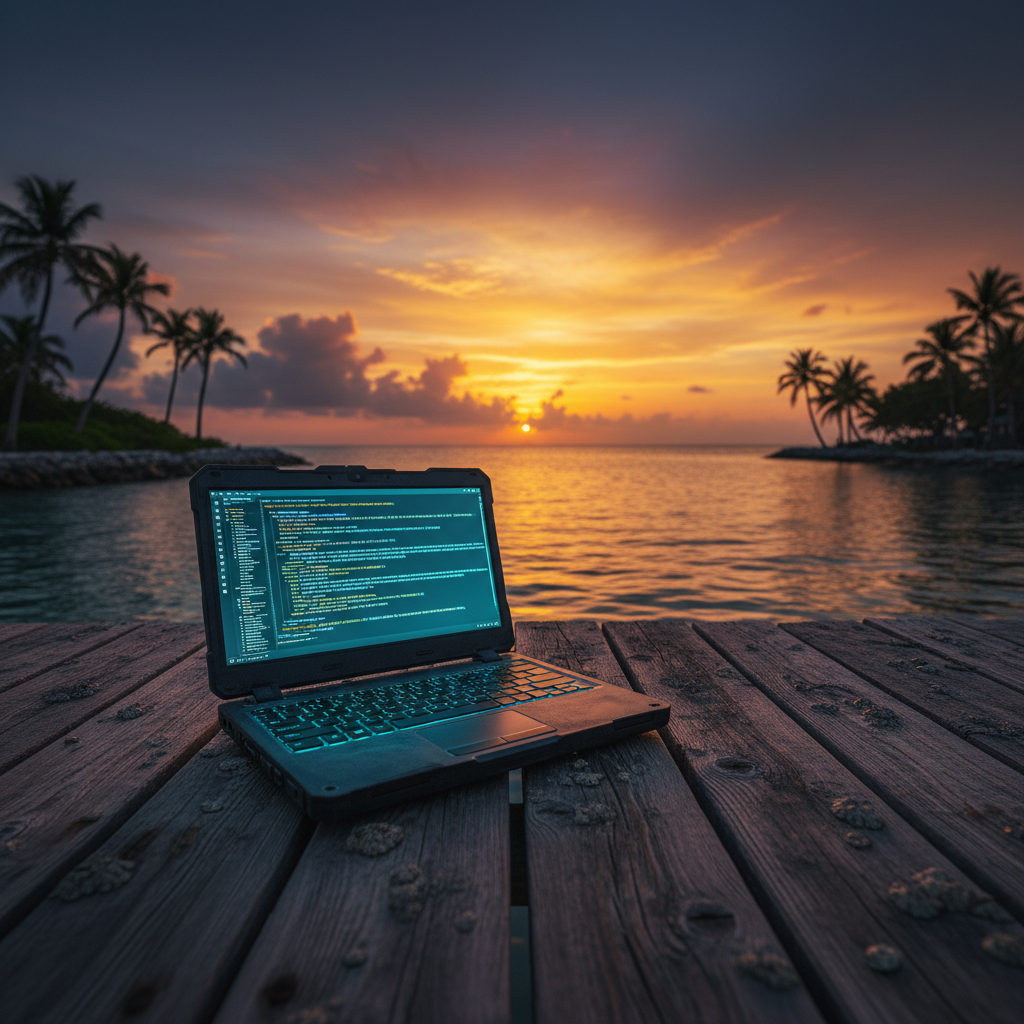
I write code from a dock in Islamorada. Sometimes from the flybridge of a 42-foot sportfisher. Occasionally from a picnic table at Robbie’s while tourists feed tarpon fifteen feet away.
The Florida Keys are not Silicon Valley. There are no coworking spaces with cold brew on tap. The WiFi is questionable. The salt air is murder on electronics. And honestly? I wouldn’t trade it for anything. Because building websites from here has shaped my entire philosophy as a developer.
The Stack
Let me break down what I use and why.
Astro
Astro is a web framework that ships zero JavaScript by default. That sounds like a weird selling point until you realize that most websites don’t need JavaScript for 90% of what they do. A business website? Static HTML and CSS with a sprinkle of JS for interactive elements. That’s Astro’s sweet spot.
Why I chose it:
- Performance. Astro sites are fast. Not “fast for a framework” — actually fast. Sub-second load times on good connections. That matters when your client’s customers are tourists on spotty Keys cellular.
- Simplicity. One framework, one build step, one deployment. No React hydration. No virtual DOM. No state management library. Just HTML, CSS, and JS when you need it.
- Islands architecture. When I do need interactivity (a booking widget, a map, a form), Astro lets me add it as an “island” — an isolated interactive component in a sea of static content. Best of both worlds.
Tailwind CSS
Tailwind is a utility-first CSS framework. Instead of writing custom CSS files, you style elements directly with utility classes. It sounds messy until you try it, and then you never want to write CSS the old way again.
Why I chose it:
- Speed. I can go from design concept to implemented layout in a fraction of the time. No context-switching between HTML and CSS files. No naming things (the hardest problem in programming, and I mean that).
- Consistency. Tailwind’s design system gives you a predefined scale for spacing, colors, typography, and more. Every site I build has visual consistency baked in from the start.
- Responsive design.
md:grid-cols-3— that’s it. That’s the entire responsive breakpoint. Three words instead of a media query block.
Netlify
Netlify is where the sites live. It’s a deployment platform that makes hosting static sites embarrassingly easy.
Why I chose it:
- Free tier is generous. Most small business sites cost literally nothing to host.
- Continuous deployment. Push to Git, site updates automatically. No FTP. No cPanel. No 2003.
- Forms and Functions. Built-in form handling (no backend needed) and serverless functions for when I do need server-side logic.
The Keys Effect
Building from the Keys has influenced my work in ways that aren’t obvious:
I build for bad connections. When your development environment has 12 Mbps download on a good day, you learn real quick what a slow site feels like. Every site I build is optimized for the worst-case connection because I’m living that worst case.
I build simple. No unnecessary dependencies. No framework-of-the-week. No over-engineering. When you have limited time between charters and limited patience for debugging, you learn to keep things lean.
I build for real businesses. My clients aren’t tech startups. They’re pool builders, charter captains, restaurant owners, production companies. Real people who need real websites that work for their real customers. That keeps me grounded.
The Toolkit in Action
Every client project follows the same core recipe:
- Astro for the framework and build system
- Tailwind for styling and design system
- Netlify for hosting, forms, and deployment
- Content from the client, refined by me, polished with AI assistance
- SEO baked in from day one — structured data, meta tags, sitemap, performance
This stack lets me deliver a professional, performant, SEO-optimized website in days instead of weeks. And it lets me do it from a dock in the sportfishing capital of the world.
Not a bad gig.
Want to see this stack in action? Browse the portfolio or let’s talk about your project.
SHARE THIS POST